Cloud 9 is the wave that put Siargao on the world map — a fast, hollow right-hand reef break in General Luna that has been hosting the Siargao International Surfing Cup since 1996. But the wave is only part of the story. Cloud 9 is also a village, a road, and now a recognised barangay; the place around the break has its own rhythm, etiquette and seasons that are not obvious from a search engine. This guide is what I tell friends asking about Cloud 9 — the wave, the lineup, where to stay, what else to do, and when to come.

I came to Siargao in 2007 and opened Kawayan Villa at Cloud 9 in 2009. I have watched nearly two decades of swells break across this reef — from the small clean summer windows when beginners can paddle out, to the September peaks that bring the world tour. This guide is what I would tell a friend before their first session here, not what an aggregator article assembles from web searches. — David Frachou, owner
A fast, hollow right-hand reef break on the east coast of Siargao Island, named after a 1990s photograph by John Callahan. Peak surf is September and October; the small-wave window for beginners is June and July. The break is across the road from Kawayan Villa — a 2-minute walk to the boardwalk that runs out over the reef. Cloud 9 now hosts the Philippines Pro, a WSL Championship Tour stop — the first ever in the Philippines — running 31 October–10 November 2026.
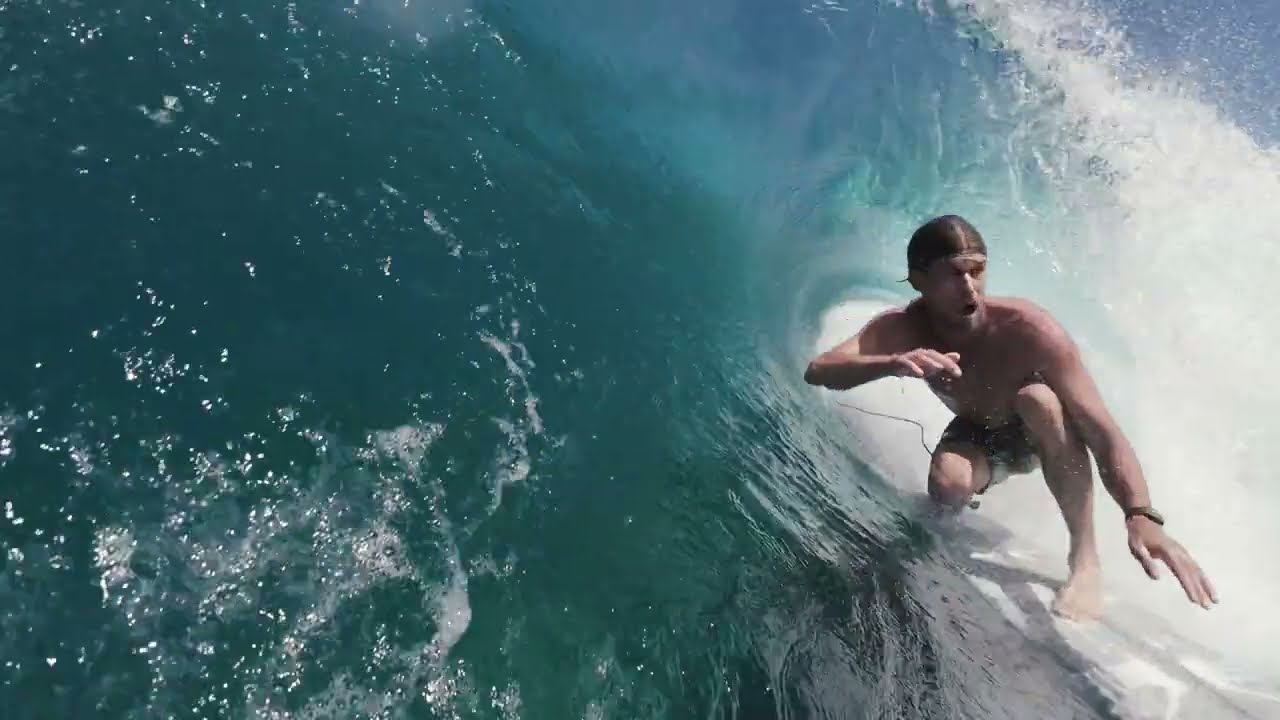 Watch Cloud 9 surfing on YouTube
What Makes Cloud 9 Special
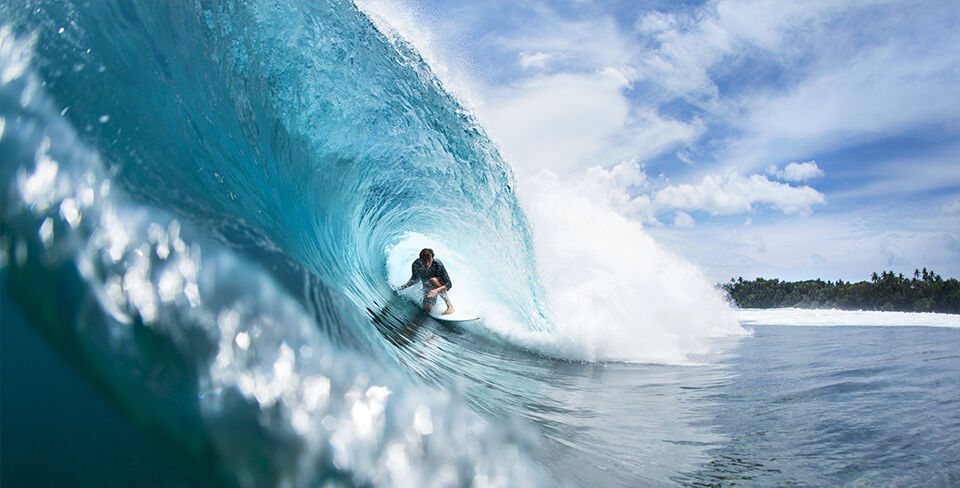
Cloud 9 is a right-hand reef break that wraps over a shallow coral platform on the east coast of Siargao Island, in the municipality of General Luna. The name predates most of the surf industry's involvement with the wave: it was christened by visiting Australian surfers in the early 1990s, and cemented in the global surf consciousness by John Callahan's photograph for Surfer Magazine in 1993. The wave was on the cover. Siargao went from off-the-map to bucket-list almost overnight.
Three things make Cloud 9 distinctive among the great reef breaks of Asia. First, it is mechanically consistent — when the swell direction and wind are right, the wave breaks the same way ten in a row, which is exactly what you want when you are trying to make a section. Second, the shoulder is generous enough that intermediate surfers can find a corner of the wave that suits them, while the bowl section holds for the pros. And third, the geography puts the lineup so close to shore that the iconic boardwalk lets non-surfing visitors get a genuinely close view of the action.
The village around the break — officially Barangay Catangnan, locally referred to as "Cloud 9" after the wave — wraps around the reef in a quiet residential pattern. There is one main road (Cloud 9 Drive), a handful of small restaurants and surf shops, a wellness scene that has grown steadily since 2019, and the boardwalk that doubles as a viewing platform and a pier for the daily lineup of surfers paddling out. The Cloud 9 Towers — the three-storey wooden tower built originally for the 2008 Surfing Cup — were severely damaged by Super Typhoon Odette in December 2021 and have been progressively rebuilt for the Philippines Pro 2026, Cloud 9's first WSL Championship Tour event.
The pace of life here is genuinely slow. Sunrise belongs to surfers, sunset belongs to everyone, and the middle of the day belongs to whoever has shade. If you arrive expecting the Bali strip or Boracay's beachfront, you will be confused. Cloud 9 is a working surf village with a luxury layer that has appeared mostly in the last seven years — and that, more than the wave, is what tells me it is worth coming back to.
The Cloud 9 Boardwalk & Tower
The Cloud 9 boardwalk is the wooden walkway that runs from the shore out over the reef to the viewing tower, right beside the wave. It is the most photographed spot on the island, and it is the reason you do not need to surf to enjoy Cloud 9: from the end of it you are looking straight into the barrel. On Google Maps the whole spot — wave, boardwalk and tower — is listed as the Cloud 9 Surfing Area.
- Entrance fee: ₱100 per person
- Opening hours: none — you can walk out at any time of day
- Best time to go: early morning at sunrise, when the wind is lightest and the surfers are out — and again at sunset
- From Kawayan Villa: about 200 metres, a two-minute walk
- Bring: a hat and water — there is very little shade out there
The Cloud 9 tower at the end of the boardwalk has its own story. The original three-storey tower was built in 2003 and became the symbol of surfing in Siargao. Super Typhoon Odette destroyed it in December 2021. A new three-storey tower has now been rebuilt for the Philippines Pro — the first WSL Championship Tour event ever held in the Philippines, at Cloud 9 from October 31 to November 10, 2026. As I write this at the end of September, the new tower is almost finished. During the contest, the boardwalk is the grandstand.
Surfing Cloud 9 — A Local's Playbook
The Cloud 9 wave is a peak that breaks both ways but is most often surfed as a fast right-hander running down a shallow coral shelf. The takeoff sits about 100 metres straight out from the end of the boardwalk. A clean session gives you a 2- to 5-second barrel section through the bowl, then a shoulder you can carve through for another 50 metres before the wave loses shape over the inside reform.
Tide and Wind
Cloud 9 works best at mid to high tide on a falling tide — roughly two hours before and one hour after low. At full low tide, the reef is too exposed and you start scraping. At full high tide, the wave loses its punch and gets fat. Tides shift the daily window, so check a tide app (any of them is fine for Siargao) before you commit to a session.
The wind is the bigger story than most beginners realise. The summer habagat wind (May to October) blows from the southwest, which is offshore at Cloud 9 — clean lines, holding lips, perfect conditions. The winter amihan (November to April) blows from the northeast, which is dead onshore — the wave still arrives, but breaks messily. This is the source of the common confusion that Cloud 9 is "flat in the off-season." It is not flat; it is blown out. The swell is often still big — it just looks like a washing machine instead of a wave.
Etiquette
The Cloud 9 lineup is policed mostly by long-tenured locals and the better-known visiting pros. Three rules matter more than the rest: do not drop in (it ends quickly), do not paddle around the peak to snake an inside position (it ends slower but worse), and if you are clearly outclassed on the day, sit on the shoulder and pick the smaller leftovers. The fastest way to be welcomed at Cloud 9 is to be obviously aware of the local hierarchy. Most of the locals are friendly. The lineup is not.
What to Bring
For most of the season, a 5'10" to 6'4" performance shortboard is the right call. Step-ups (6'6" to 7'0") come out for September and October when the swell pushes overhead. Longboards and softboards are not common at the Cloud 9 peak itself — for those, go to Jacking Horse, Quicksilver or Cemetery. Reef booties are uncommon (most of us go barefoot), but if you prefer them, bring a pair from home — the Cloud 9 boardwalk shops carry a limited selection.
When to Book Lessons
If it is your first time surfing in Siargao, do not start at Cloud 9. The shallow reef, the local lineup and the speed of the wave do not forgive beginner mistakes. Book a lesson at Jacking Horse or Quicksilver instead — both are right-hand reef breaks with reform sections that are gentle enough for first-timers. The villa team can connect you with vetted local instructors. The small-wave season — June and July — is the right window for beginners anywhere on Siargao.
Other Surf Spots Near Cloud 9
Beyond Cloud 9 itself, the General Luna area has roughly a dozen named breaks within a 10-minute tricycle ride. The ones we send guests to most often:
- Jacking Horse — small right-hand reform near the Cloud 9 boardwalk. Beginner-friendly, busy.
- Quicksilver — small to intermediate right next to Jacking Horse. Holds size, gets serious in big swell.
- Stimpy's — fast left a short paddle from Cloud 9. Less crowded, demanding.
- Tuason Point — long right reef south of General Luna. Holds size, fewer crowds than Cloud 9.
- Cemetery (Pesangan) — intermediate left and right, a short ride north.
- Daku Island — beginner-friendly small right on a reef off the island. Quiet on weekdays.
- Tangbo — mellow left and right north of Cloud 9. Good intermediate option.
- Pacifico — long left on the north coast, about a one-hour drive. Empty, beautiful, a day trip on its own.
Siargao has no beach breaks in the General Luna area. Every spot is a reef. Plan accordingly.
Where to Stay at Cloud 9 — Villas, Resorts, Hotels & Hostels
Accommodation at Cloud 9 covers the full range — from ₱800-a-night surf hostels above shops on the boardwalk to fully exclusive private villas at ₱20,000+ a night. The right choice depends on what you came for and who you are travelling with.
For a private estate at the wave — Kawayan Villa is the only fully private villa directly at the Cloud 9 surf break. The entire 2,450 m² estate, two king bedrooms sleeping up to 8 across both rooms, a private mirror pool, the 220 m² living room with bar and pool table, and breakfast from our French bakery delivered to the pool each morning. Book both bedrooms and it is entirely yours, no shared facilities.
For a beachfront boutique resort — Kalinaw Resort is the strongest competitor in this tier. Six beachfront villas with private pools, French-led design, a short ride from Cloud 9. More communal feel than a private villa, less direct proximity to the break.
For an all-inclusive luxury escape — Nay Palad Hideaway in Del Carmen is the island's all-inclusive option. Around US$1,000 per person per night, with all meals, drinks, transport and activities included. Genuinely beautiful, and genuinely far from Cloud 9 (~45 minutes by van). Not the right base for a surf-focused trip.
For boutique mid-range with a private pool — Mango Tree Siargao, Kalima Villas and a handful of similar properties offer independent units with private pools in the ₱12,000–₱18,000 range.
For a hotel or surf resort right at the break — a handful of places sit at the wave itself. Hue Hotels and Resorts Siargao is the newest, built on the cliff and facing Cloud 9 directly. Kesa Cloud 9 Hotel & Resort is in front of Cloud 9. Ocean 101 Beach Resort and Point 303 Resort are the long-standing surf resorts — Point 303, family-run since 2008, sits right across from the break with a pool, pool bar and restaurant.
For backpackers and surf-trip pros — the boardwalk and Cloud 9 Drive have dozens of small surf hostels and pension houses starting around ₱800–₱1,500 a night. Simple, social, and close to the wave.
Still comparing? Our full guide to the best resorts in Siargao stacks Kalinaw, Nay Palad, Isla Cabana and more up against the private-villa option on price, location and who each suits.
The closer to the boardwalk you sleep, the easier the daily walk in boardshorts. The further you go, the more you rely on a tricycle or a scooter for each session. That trade-off is the whole geography of staying at Cloud 9. For a detailed comparison of the luxury villa tier, see our Best Villas in Siargao 2026 guide. Check Kawayan Villa availability →
Where to Eat & Drink at Cloud 9
You can eat well without leaving Cloud 9. These are the places right at Cloud 9, within a short walk of the break, that I send guests to:
- Kawayan Gourmand — our own French bakery, 200 metres from the break. Viennoiserie, sourdough and specialty coffee from 6am.
- Shaka Café — on the Cloud 9 boardwalk. Smoothie bowls, acai and coffee; the surf-morning staple.
- Siargao Hawker — Singaporean, at Cloud 9.
- Fin & Fin Beach Shack — seafood, directly across from the Cloud 9 entrance.
- Cloud 8 — Taiwanese dumplings and fried rice, in the Cloud 9 area.
- Cafe Loka — the café at Cloud 9.
- Happy Islander — newly opened, right next to Cafe Loka.
For the restaurants a short ride away, and what to order dish by dish, see where to eat in Siargao, and for breakfast and coffee, the best coffee shops in Siargao.
Beyond the Surf — What Else is Worth Doing
Cloud 9 is the headline, but you do not need to surf to enjoy Siargao. Most guests spend half their trip on the water and the other half in the surrounding island world.
Island-hopping to the tri-island circuit — Naked Island (a sandbar), Daku Island (lunch and beach) and Guyam Island (snorkelling and palms) — is the must-do day trip from General Luna. Most boats leave around 9am and are back by mid-afternoon.
Magpupungko is a natural rock-pool system on the north coast that becomes spectacular at low tide. The pools are crystal clear, shallow enough to swim and jump in from the rock edges. Check a tide chart — at high tide there is nothing to see. About 45 minutes from Cloud 9.
Sugba Lagoon is the emerald-green lagoon in Del Carmen, reached by speedboat from the Del Carmen pier. Paddleboarding, platform jumps, lunch on a floating bamboo deck. Half-day trip.
Maasin River offers a slow bamboo-raft float under coconut palms, plus the famously photogenic bent palm you have probably seen on Instagram. Combines well with Magpupungko on the same day.
Scuba diving at the eastern reefs and around the volcanic dome at Blue Cathedral is genuinely good. Several PADI shops in General Luna run guided dives for certified divers and open-water courses for beginners.
Sohoton Cove and Bucas Grande Islands are a full-day trip from General Luna — the non-stinging jellyfish lagoon, Hagukan Cave and the dramatic karst landscape are worth the longer travel day.
For food, the Kawayan Gourmand bakery 200 metres from Cloud 9 is our own venture — French viennoiserie, sourdough and specialty coffee from 6am. Beyond that, Shaka Café, Lampara, Mama's Grill, Bravo and Harana are the General Luna stops we send guests to most often. For a full day-by-day plan, see our 3, 5 and 7-day Siargao itinerary.
Best Time to Visit Cloud 9
Cloud 9 has two surf seasons and one shoulder window. The maths is simpler than the marketing copy makes it sound.
June to early August — small-wave season. The big winter swells have faded, the southwest habagat wind has settled into offshore mode, and the wave is clean but small. Ideal for intermediate surfers wanting clean conditions without the September crowds, and the right window for beginners learning at Jacking Horse and Quicksilver.
Mid-August to November — peak surf. Typhoon swells in the western Pacific funnel southeast and arrive at Cloud 9 as long-period groundswell. September and October hold the best ratio of size, wind and consistency. The Philippines Pro — the WSL Championship Tour's first-ever Philippine stop — runs 31 October–10 November 2026 — see our guide on where to stay during the Philippines Pro and book as early as possible for that window. November tails off but still produces.
December and January — typhoon-risk window. This is the genuine typhoon risk for Siargao. The cold front that pushes south from Japan in winter blocks typhoons from tracking north over Luzon and redirects them through the central and southern Philippines, including the Visayas and Mindanao. Super Typhoon Odette (Rai) hit Siargao on 16 December 2021. Sayak Airport, the Cloud 9 boardwalk and most accommodation were rebuilt within 6 to 12 months. The risk is real but limited to about six weeks of the year.
February to May — shoulder, transitioning back. Wind is the issue. The northeast amihan is still dominant and Cloud 9 is messy. Wind gradually shifts back to southwest through April. Smaller breaks around General Luna start to clean up first. By late May, the next surf season is approaching.
For the full month-by-month breakdown including weather, crowds, prices and what each window is best for, see our Best Time to Visit Siargao guide.
Getting to Siargao in 2026
Siargao is served by Sayak Airport (IAO), about 45 minutes north of General Luna by private transfer. The route situation in 2026 is worth knowing before you book — for the full route table, all-in fares and what to do if your flight cancels, see our How to Get to Siargao in 2026 guide:
- From Cebu (CEB): the most reliable route. Daily flights with Cebu Pacific, Cebgo and Philippine Airlines, about one hour. This is the standard option for most international travellers connecting via Manila or Singapore.
- From Manila (NAIA): Philippine Airlines moved all turboprop services to Clark on 29 March 2026, so most Manila-Siargao trips now connect via Cebu.
- From Clark (CRK): Cebgo and Sunlight Air fly direct. Philippine Airlines' Clark-Siargao route was suspended from 4 May 2026. Verify before booking.
- From Davao (DVO): Cebu Pacific operates direct, useful for travellers already in Mindanao.
Sayak Airport itself: the new passenger terminal has expanded pre-departure capacity from 200 to 750 seats. Arrival processing is generally fast — small island flights, no jet bridges, baggage out within 10 to 15 minutes.
From Sayak to Cloud 9, your options are:
- Private van transfer — about 45 minutes, comfortable, the right choice with bags. Kawayan Villa arranges this for all guests as part of the booking process; the driver meets you at the arrival gate with your name.
- Shared van — ~₱500 per person, longer, drops at General Luna town. Cheaper but slower if you have to wait for the van to fill.
- Tricycle then habal-habal — for the adventurous and luggage-light; works fine.
Once you are at Cloud 9, you rarely need a vehicle. Most things are walkable or a 5-minute tricycle ride away. For longer trips (Magpupungko, Sugba Lagoon, Sohoton) the villa concierge arranges a private van. For visa and entry requirements, check the Philippine Department of Tourism site before you fly.
Frequently Asked Questions
Where is Cloud 9 Siargao?
Cloud 9 is a right-hand reef break on the east coast of Siargao Island, in the municipality of General Luna. It is named after a 1990s photograph that put the wave on the world map. The break is directly across the road from Kawayan Villa — a 2-minute walk to the boardwalk that runs out over the reef.
Is Cloud 9 good for beginners?
No — Cloud 9 is a fast, hollow reef break that breaks in shallow water, suited to intermediate and advanced surfers. Beginners should start at Jacking Horse or Quicksilver, two right-hand reef breaks a few minutes from Cloud 9, which have small reform waves and a safer bottom. The small-wave season (June and July) is the right window for first-time surfers anywhere in Siargao.
When is the best time to surf Cloud 9?
September and October — peak surf, clean 4-to-8-foot faces almost daily. August is the warm-up, November is the tail end. The widely-quoted notion that Cloud 9 is flat from December to May is not accurate: the swell is often big year-round, but the northeast amihan onshore wind blows the wave out, making it messy rather than absent.
Where should I stay near Cloud 9?
For families or groups who want a fully private space, Kawayan Villa is the only fully private villa directly at the Cloud 9 surf break. Nearby alternatives include Kalinaw Resort (six beachfront villas, more communal feel) and various smaller surf hostels along Cloud 9 Drive. The closer to the boardwalk, the easier the daily walk in boardshorts.
How much is the entrance fee at Cloud 9 Siargao?
The Cloud 9 boardwalk costs ₱100 per person. There are no opening hours, so you can walk out at any time. The best moments are early morning at sunrise, when the wind is light and the surfers are out, and sunset.
How do I get to Cloud 9?
Fly into Sayak Airport (IAO) on Siargao via Cebu — about one hour with Cebu Pacific, Cebgo or Philippine Airlines. From Sayak it is roughly 45 minutes by van or private transfer to Cloud 9, General Luna. Most accommodations including Kawayan Villa arrange the airport transfer in advance.
Stay at Kawayan Villa Siargao
The only fully private villa directly at the Cloud 9 surf break. Private pool, tropical garden, daily breakfast — steps from the famous boardwalk.